A native of South-Central Los Angeles, California, Victoria Ramos is a multi-instrumentalist Latina/Hispanic American composer that is fearless in her exploration of the wide range of sounds, textures, ideas, stories through various forms, styles, and other outlets while including personal touches, science, and her out of the box thinking.
Ramos studied Music Composition and Cognitive/Neuroscience at the University of Wyoming (UW) in Laramie, Wyoming. During that time, she studied music composition under Dr. Anne Guzzo and harp under Hillary Schefter. At UW Ramos was the inaugural winner of the Dorothy Jacoby Orchestral Composition Contest, where she was honored to have a world premiere of her symphony orchestra, Cxion, performed by the University of Wyoming Symphony Orchestra. She remained active in multiple ensembles during that time in various instruments she plays at an advanced level, predominantly in clarinet, euphonium, percussion. She continued to further her studies in composition at Vermont College of the Fine Arts (VCFA) in Montpelier, Vermont where she received her Master’s of Fine Arts degree in Music Composition under the mentorship of Michael Early, Jonathon Bailey Holland, and Roger Zahab. At her time at VCFA she had the honor to work with and collaborate with multiple musicians and ensembles like Chatham Baroque, Kamilla Arku, Anna’s Ghost, and SonLingua where they premiere her innovative and creative compositions that showcases multiple themes/concepts, i.e. neuroscience, astrophysics, identity, perspective, accessibility, stories of underrepresented people, perfectionism, etc. Her honest and innovative approach have created incredible meaningful works that create connections to the listeners.
Ramos has provided consults and teachings in how to compose for harp. She is an active member of the Chord 47 community, where it is a space for non-traditional (BIPOC, trans, queer, electronic, modern, outside the classical world, etc.) harpist to connect and learn.
Her pieces, Into the Black Hole for electric guitar and effect pedals, is featured as part of the curriculum in “Music History of All Genres Since World War II” at the New School, where they showcase a wide range of contemporary music for guitar., which is currently taught by composer, educator, and music journalist, Frank J. Oteri, an advocate of new music. This composition is a graphic score that incorporates astrophysics and calculations done by Ramos due to her background in the subject while exploring accessibility and creative perspective from different backgrounds. Overall the piece is an art piece itself. It also pays homage to her musical beginnings and interest.Her most recent project was a partnership with the Donne Foundation and the duo, Her Endangered Melody, consisting of Saffron Sonoda (classical guitar) and Joana Isabelle Moura (double bass). This project helped raised funds for the Donne foundation to help include, promote and support women in music. Their goal is to make a profound shift within the music industry for equal opportunities to rule irrespective of gender. By raising profiles of women composers through history and today so that they can be more role models for the generations to come along with showcasing works with classical guitar and double bass, which are typically dominated by male composers. This project introduces and develops more female-composed repertoire across the world. Ramos premiered her piece, Away We Fly, along with other female composers in Manchester, UK to support the mission of the Donne Foundation.
Ramos is open to new projects, teaching, consults, and collaborations to create more new music and stories.
Influences and Inspiration
An In-depth Look
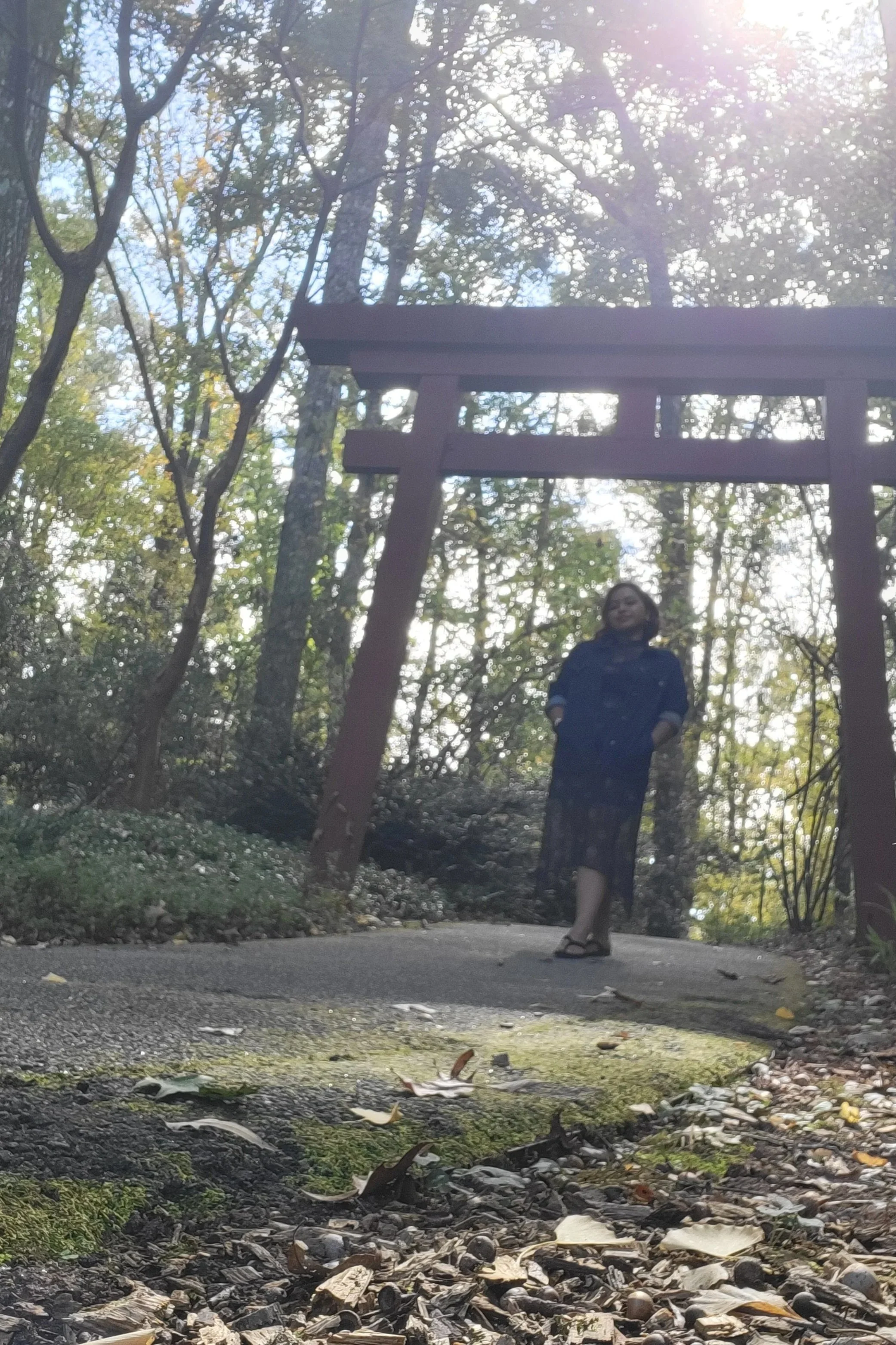
As first-generation Latina/Hispanic American, many things were unknown and foreign to her, but it made her insatiably curious. Born to Guatemalan parents that dropped out at 12 and 17 due to unfortunate circumstances, they were limited in resources, what they knew in an academic setting, but filled with life experience and encourage to seek beyond what is possible. Surrounded by a neighborhood of immigrants, she was exposed to multiple cultures like Latin, Asian, Middle Eastern, Slavic, etc. This includes their cultural practices like music, dance, food, stories and more.
Ramos gets her inspirations from stories, messages and words from people. Living in poverty she was exposed to many perspectives and stories of the human experience. The advice she has taken from a young age living in poverty and from living surrounded by various cultures was was to learn everything and anything and that there is always more than one way to do something. Valuing knowledge is important in music and other areas that can provide lessons whether in success and failures, conversations and observations, even surviving and adapting. With this advice she sought out to explore and understand, especially in music when she first picked up an instrument.
She also gets inspired by images, visual and performing arts, travel, her science background, people, activism, uplifting and using her platform to uplift voices, and even playing the multiple instruments; harp, clarinet, euphonium, tenor sax, bassoon, percussion, or other instruments she can get her hands on. This led to Ramos playing with the instrumentation, whether it is range or extended techniques, etc. and how it can play with other instruments even when it is not commonly played with, along with movement and what colors it can create to help enhance ideas of melodies and phrasing.
Whether it was as a performer or a listener she is open to music from various styles. She delved into studying works from Pyotr Illiyich Tchaikovsky, Nikolai Rimsky-Korsakov, Igor Stravinsky, Keiko Abe, Claude Debussy, William Grant Still, Manuel de Falla, Felix Mendelssohn, Maurice Ravel, Sofia Gubaidulina, Toru Takemitsu, and Arturu Marquez who have heavily influence her. Growing up with immigrants the only exposure to music that was in English she was exposed to was from fifties to the nineties like Motown, rock, hip hop, folk, disco, funk, etc. along with Latin music, all which continue to inform her musical language.
As an Educator…
Ramos passion for music led to her excitement in teaching. She started teaching private lessons in various instruments for many years. Ramos was also invited to teach harp writing class for intro and advanced composition studio classes. Recently she has been a consult for harp writing for composers, especially in genres outside of the classical realm.
Exposed to various teaching styles she has developed her own style of teaching that aides in the continuation and evolution of music. She values the importance of accessibility and people coming from different backgrounds, cultures, and available resources. She understands that people learn differently and tries to connect ideas/topics to the student(s) interests using examples that resonates with them to make it meaningful and engaging. Ramos philosophy is also based on all critiques are welcomed but not all words. She focuses on feedback that is supportive and respectful, while encouraging confidence, skill and refinement. The overall goal is to help develop their own musical voice, deepen their understanding, and enjoy the process of the exploration and creation of music.
As a musician…
Ramos began her musical studies at a young age. She originally was a percussionist as her father was and was her first teacher. She was introduced to many international instruments like cajon, erhu, berimbau, etc. through family and friends. She eventually went to learn harp because of poverty (further explanation in a future blog post) an instrument she was fascinated with when seeing it in person and in anime/cartoons. Through public school, she was involved with band and choir classes. She learned clarinet, tenor saxophone, bassoon, euphonium, and participated in ensembles throughout her academic career and highlighted for leadership in her small wind ensemble. As a soloist, specifically in clarinet, she received high recognition and awards for her performance, even highlighting her rich lyricism and her carefully shaped melodic phrasing. She continued her training at an advanced level and was training to become a woodwind performance specialist. She ended up falling in love with composition and ceased her training, short of being proficient in flute and oboe. Along with her being advanced in most woodwind instruments, she has advanced her playing in low brass instruments, i.e. euphonium, tuba, trombone.
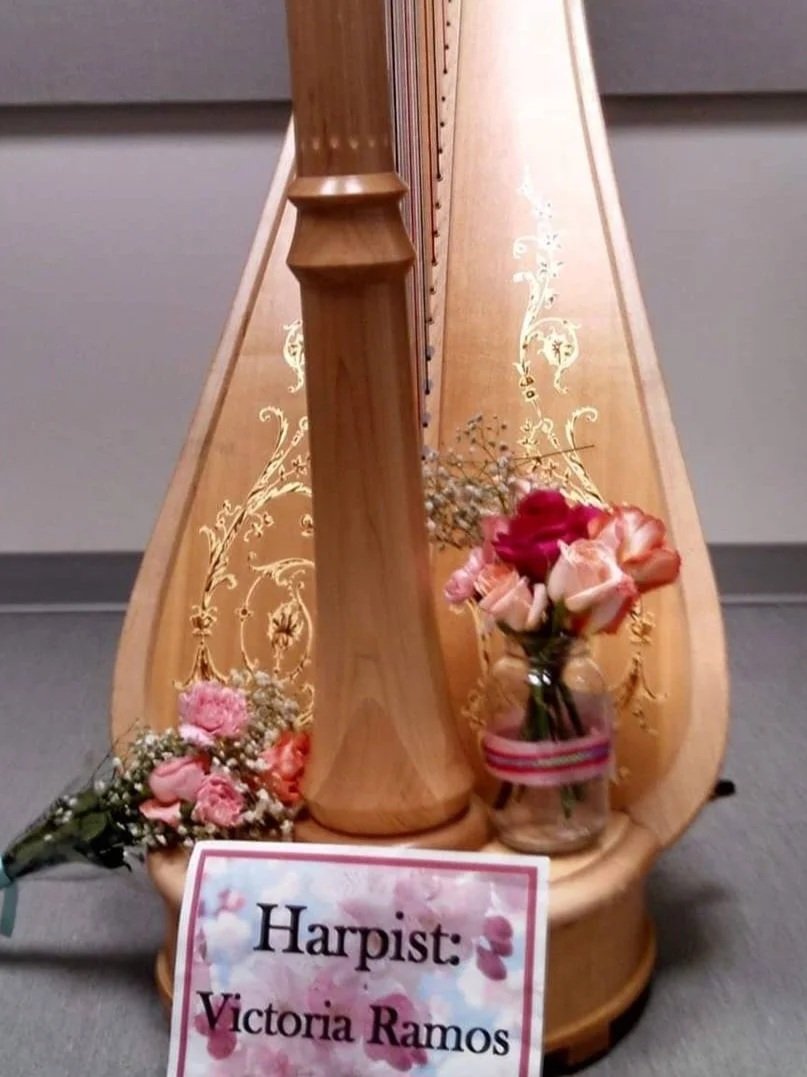
She has performed in multiple ensembles during her collegiate career and community ensembles. As a harpist she has been in demand and performed for multiple events, cocktail hours, award ceremonies, and other occasions to create a warm, mesmerizing, atmospheric environment.
Education
Bachelors in Arts in Psychology with an emphasis in Cognitive/ Neuroscience at the University of Wyoming
Bachelors in Arts in Humanities and Fine Arts with an emphasis in Music and Communications at the University of Wyoming
Master of Fine Arts in Music Composition at Vermont College of Fine Arts
Recognition and Awards
Inaugural winner of the Dorothy Jacoby Orchestral Composition Contest
World premiere of her symphony orchestra, Cxion, performed by the University of Wyoming Symphony Orchestra and conducted by Michael Griffith.
Her piece, Into the Black Hole, for electric guitar and effect pedals, is featured as part of the curriculum in “Music History of All Genres Since World War II” at the New School, where they showcase a wide range of contemporary music for guitar., which is currently taught by composer and music journalist, Frank J. Oteri, an advocate of new music.
Partnership with the Donne Foundation and the duo, Her Endangered Melody (Saffron Sonoda and Joana Isabelle Moura). To raise funds for the Donne Foundation help include, promote and support women in music.
World Premiere Away We Fly at Manchester, UK and performed by Her Endangered Melody